
Buying Bunker Gear (Part 1)
A Guide to Smart Bunker Gear Purchases
As the former Canadian Regional Sales Manager for a major bunker gear manufacturer, I have too often seen FDs make the same purchasing mistakes over and over again. Here, I would like to discuss a few of these errors and help you buy the gear you need and save money.
- KNOW YOURSELF! Take a long, hard and honest look at the nature of the calls you run. How many structure fires do you have in a year? What are those fires like – industrial, residential? What is your REALISTIC response time to be on scene? What is your default fireground strategy?
If you run few structure fires, arrive on the scene 10 mins or more after the alarm is received with poor manpower and tend to adopt a defensive strategy, then your bunker gear needs are different than someone arriving sooner and adopting an offensive strategy. - Management vs Members. Many FDs will strike a committee to conduct research and receive presentations or wear trials. While it is a GREAT idea to consult and involve the membership in the decision-making process, PLEASE try and get on the same page of thought with each other. Far too often, these relationships are acrimonious and the process becomes a battle of wills and egos with the Bunker Gear Rep in the middle, trying to appease everyone. This decision is about protecting the membership at a budgetary responsible dollar value. PLEASE put personal relationships aside to get this right.
- Don’t get TOO caught up in the numbers game. THL (Total Heat Loss) and TPP (Thermal Protective Performance) are measurements of how well a fabric combination (outer shell/moisture barrier/thermal liner) breaths and protects against heat. While these values are valid concerns for the wearer, the numbers themselves are subjective as there is always some “acceptable” variance from lot to lot in the fabrics. In turn, the companies (fabric manufacturers, fiber manufacturers, bunker gear manufacturers etc) submitting the fabric combination swatches for certification, will many times multi-submit from different lots of fabric to obtain the best certified TPP and THL values to suit their marketing desire. So what you get, might not be the same values as certified.
Also, after the initial wash of the garment, the fabric fibers will permanently expand. This will reduce the THL (breathability) and increase the TPP (heat protection) anyway. So again, please use the published numbers as a guideline only! - Lastly, for this installment, ask to see the numbers! There have been many innovations over the last 8 years in particulate blocking and the processing of body heat and perspiration vapour to help reduce heat stress. BUT, are these innovations lab tested? Is there data to back up the claims? Or, are they just logical, anecdotal conclusions to the innovation supplied?
Bunker Gear is a vital piece of kit for the firefighter’s protection. It may not be as exciting a tool as say auto-ex tools, but it is MORE vital to the wearer’s protection. PLEASE give this decision the time and effort needed to buy correctly.
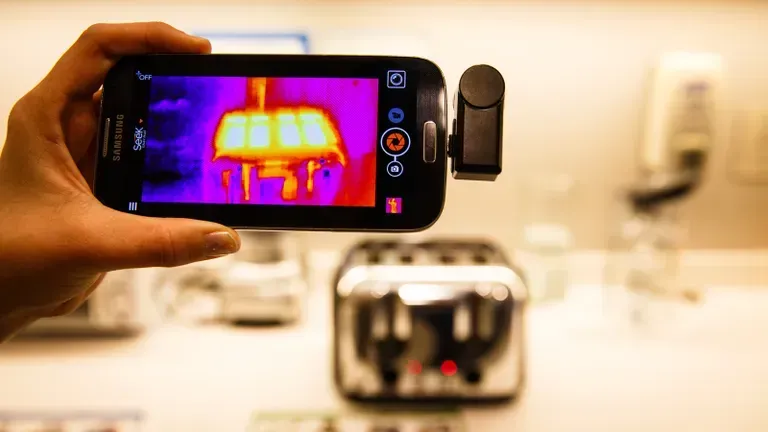
Not that long ago, firefighting relied almost entirely on instinct, training, and teamwork, and while those fundamentals haven’t changed, the tools certainly have. Over the years, thermal imaging cameras (TICs) have evolved from bulky, specialty equipment into something that’s now becoming standard on fire trucks across the country. Seek Thermal has been fortunate to see that evolution up close, and to play a role in making high-quality, affordable thermal cameras available to more firefighters than ever before. From Heavy Gear to Everyday Tools When thermal imaging first entered the fire service, the cameras were large, heavy, and expensive. Only a few departments could afford them, and often only officers or chief vehicles carried them. The concept was revolutionary, seeing heat through smoke and darkness, but the technology was limited by its size and cost. Fast forward a couple of decades, and the picture looks very different. Cameras are now smaller, lighter, and far more affordable. In many departments, firefighters are carrying TICs the size of a cell phone. That shift alone has transformed how firefighters work. Thermal imaging isn’t just a specialty tool anymore; it’s part of the standard gear lineup, as essential as an SCBA or a radio. Smarter, Faster, and More Affordable Technology Today’s thermal imaging cameras don’t just show heat. They deliver clearer, faster, and more stable images than ever before. Advancements in sensor design and software processing have made cameras more responsive, meaning firefighters see real-time detail without lag or image “whiteout” when moving between hot and cool areas. At the same time, manufacturing innovations have made these improvements more cost- effective. What once cost tens of thousands of dollars can now fit within a department’s annual equipment budget, allowing even smaller and volunteer departments to equip their crews. Seek Thermal has focused on developing cameras that deliver professional-grade clarity and durability while keeping the price within reach. Because when every firefighter has access to thermal vision, not just the officer holding the single camera, the entire crew benefits. The more people who can “see” what’s happening through smoke and heat, the safer and faster the response becomes. The Rise of Situational Awareness Cameras One of the biggest steps forward in recent years has been the rise of situational awareness cameras. Smaller, simpler TICs designed for quick assessments, exterior operations, and backup visibility. These aren’t just for interior fire attack; they’re for seeing the full picture of the incident scene. Situational awareness cameras have changed how firefighters size up a scene, locate hotspots, and monitor fire behavior in real time. They’ve also become a key safety tool, helping firefighters regain orientation when visibility drops to zero and reducing mayday incidents related to disorientation. Cameras like Seek’s FirePRO Series were built with this exact purpose in mind. To support firefighters inside and outside the structure by providing clear, reliable imaging in a compact, rugged design. Whether it’s being used during overhaul, exterior size-up, or search operations, a situational awareness camera gives crews the visibility they need to make smart, informed decisions. Supporting the Future of Firefighting Thermal imaging cameras have come a long way. From heavy, single-use tools to compact, affordable, and essential firefighting equipment. They’ve improved not only how fires are fought but also how firefighters stay safe doing it. Seek Thermal is proud to support that progress. Every camera designed, from situational awareness cameras like the FirePRO Series to tactical, interior-focused options like the AttackPRO Series, is built around one goal: helping firefighters see more, decide faster, and come home safely. Because technology should never replace experience, it should strengthen it. And that’s exactly what modern thermal imaging does on the fireground every single day. For more information on Seek Thermal’s line up of thermal imaging cameras for the fire service, visit their website here: https://www.thermal.com/firefighting.html